
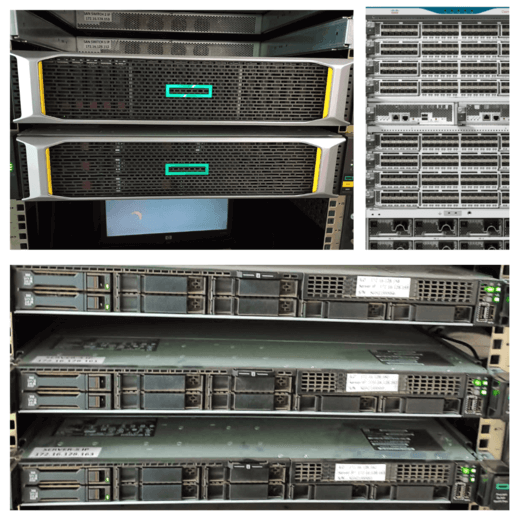
Jamia Millia Islamia required a robust and centralized server and storage infrastructure to manage growing data volumes, improve accessibility, and strengthen overall IT operations. The existing environment relied heavily on cloud-based storage, which introduced increasing operational costs and reduced direct control over critical institutional data.
One of the major challenges was managing rising storage expenses while maintaining performance and availability for academic and administrative operations. As data continued to grow, the need for a more cost-efficient and scalable solution became essential.
Another key concern was limited visibility and control over data management processes within the existing environment. The institution required greater flexibility in managing storage resources, user access, and long-term data governance.
Additionally, ensuring secure storage, faster data access, and uninterrupted availability became increasingly important to support daily operations and future digital expansion.
- Infrastructure Assessment & Planning: Conducted detailed capacity and infrastructure analysis to design a server and storage environment aligned with current operational requirements and future growth.
- Server & Storage Deployment: Established a secure and scalable on-premises server and storage infrastructure to centralize data management and improve system performance.
- Data Migration & Integration: Executed structured data migration processes to transfer workloads with minimal disruption while maintaining data consistency and operational continuity.
- Security & Access Management: Implemented enhanced security controls, user access policies, and monitoring mechanisms to strengthen data protection and administrative control.
- Performance Optimization: Configured storage resources to improve application responsiveness, optimize data availability, and deliver faster access across departments.
To address these requirements, Jamia Millia Islamia needed a reliable server and storage environment that could provide improved performance, enhanced security, and long-term scalability.
- Reduced dependency on external storage platforms and improved cost efficiency.
- Strengthened control over institutional data and storage management.
- Improved application and data access performance across departments.
- Enhanced security and monitoring capabilities.
- Enabled reliable backup and business continuity processes.