
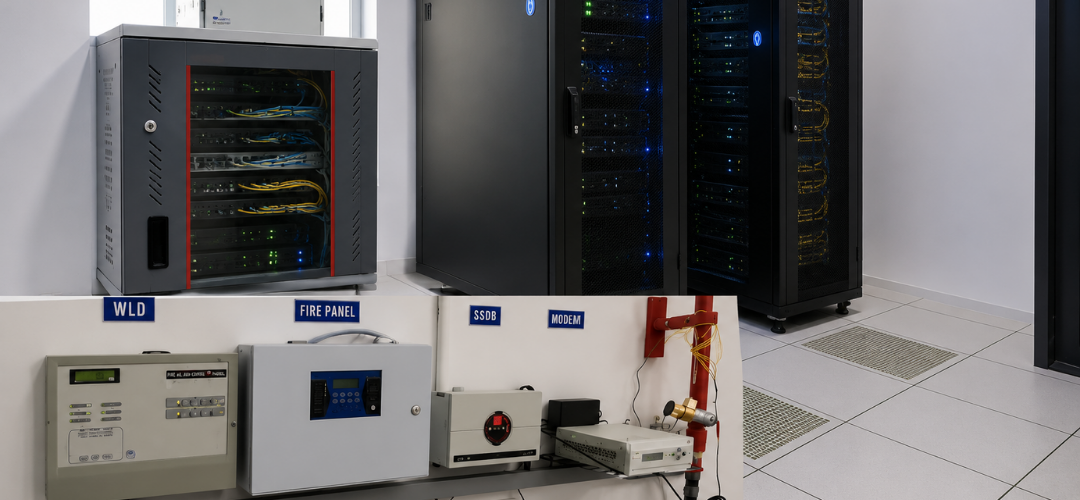
Sona Comstar was experiencing growing infrastructure and connectivity challenges due to increasing business operations and expanding user requirements. The existing environment was not designed to accommodate rapid growth, resulting in performance limitations and operational concerns.
One of the primary challenges was the high demand for user connectivity, as an increasing number of employees and business applications required continuous and reliable network access. This placed significant pressure on the existing infrastructure and created risks of reduced performance and slower communication.
Another major challenge was the limited availability of physical space for establishing a dedicated data center environment. Since no infrastructure space had been allocated during the construction phase, deploying traditional data center architecture became difficult and required a more optimized approach.
Additionally, the organization required an infrastructure capable of supporting future expansion and increasing workloads without frequent redesign or operational interruptions. Existing limitations highlighted the need for improved network planning, efficient resource utilization, and better scalability.
- Space Optimization: Designed a compact and modular data center architecture to efficiently utilize limited available space.
- Scalable Infrastructure: Implemented a scalable infrastructure framework to support future growth and expansion.
- Network Optimization: Enhanced user connectivity through advanced switching and routing technologies.
- Energy Efficiency: Deployed energy-efficient cooling systems to reduce operational costs and improve sustainability.
- Reliable Uptime: Integrated redundant power systems and backup infrastructure to ensure uninterrupted operations and high availability.
To maintain business continuity and ensure seamless operations, Sona Comstar required a modern infrastructure solution that could optimize available space, improve connectivity, support future growth, and deliver long-term operational reliability.
- Improved User Connectivity: Enhanced network performance enabled faster and more stable connectivity across users and business operations, reducing communication delays and improving overall productivity.
- Optimized Space Utilization: The compact and modular infrastructure design allowed efficient use of available space while successfully accommodating critical IT systems within physical constraints.
- Scalable Growth Enablement: The deployed architecture provided flexibility to support increasing users, applications, and future infrastructure expansion without major redesign requirements.
- Enhanced Network Performance: Advanced switching and routing optimization reduced bottlenecks and improved overall network responsiveness and operational efficiency.
- Lower Operational Costs: Energy-efficient infrastructure and cooling systems contributed to optimized resource consumption and improved long-term cost management.